


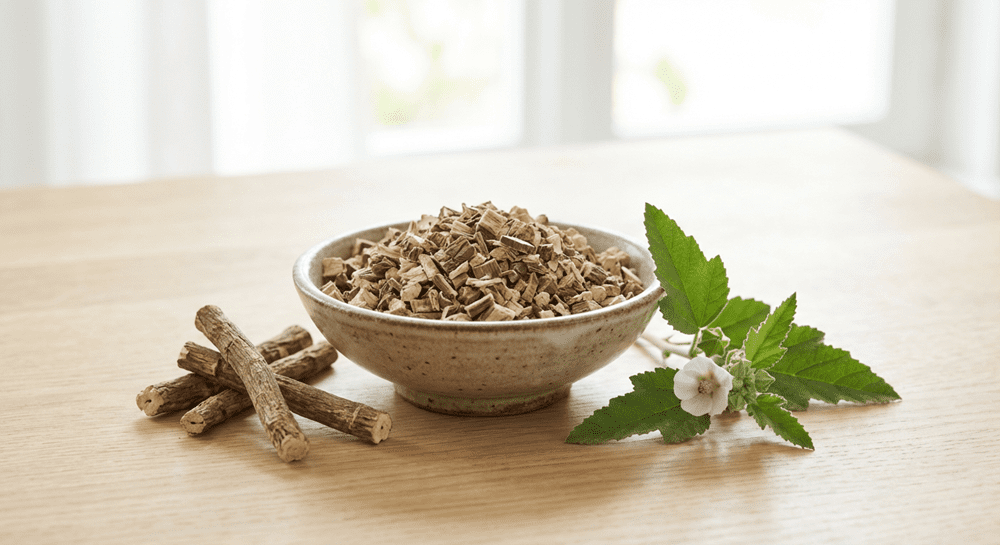
Marshmallow root is a mucilage-rich herb traditionally used to soothe the throat, support digestive comfort, and help protect dry or irritated tissues. Today, interest in marshmallow root benefits continues to grow, but it is important to separate long-standing herbal use from modern scientific evidence. It is also worth knowing that not all marshmallow root is equal: botanical identity, harvest timing, drying method, purity testing, and traceable sourcing all influence overall quality.
Unlike the sweet confection, marshmallow root comes from the plant Althaea officinalis. In herbal preparations, it is valued less for flavor and more for its naturally slippery polysaccharides, often called mucilage, which form a soothing gel when mixed with water.
Quick Takeaways
- Marshmallow root is traditionally used for throat comfort, digestive soothing, and gentle topical care.
- Its key functional trait is mucilage, a gel-forming fiber that coats and protects tissues.
- Traditional use is long established, but modern human evidence is still limited and should be described carefully.
- Quality matters: origin, drying conditions, cut size, storage, and contaminant testing can all affect the finished ingredient.
- Because its mucilage may slow the absorption of oral medications, timing and safe use deserve attention.
What is Marshmallow Root?
Marshmallow root comes from Althaea officinalis, a perennial plant native to parts of Europe, Western Asia, and North Africa. The root is the part most commonly used in herbal preparations, although the leaves and flowers are also used in some traditions.
Its name often causes confusion. Marshmallow root is not the same as marshmallow candy sold in stores today. Historically, the plant’s sap was used in early confectionery, but modern marshmallows are usually made without the herb.
What makes marshmallow root distinctive is its high mucilage content. When steeped in water, especially cool water, the root releases a thick, slippery substance that can coat the mouth, throat, and digestive tract. That is why it is often described as a classic demulcent herb.
What Is Marshmallow Root Used for Traditionally?
In traditional herbal practice, marshmallow root has been used where a soothing, moistening effect is desired. It is especially associated with “dry” or irritated tissues.
Traditional uses of marshmallow root include:
- supporting comfort in a dry, scratchy throat
- soothing the digestive tract
- comforting irritated mucous membranes
- topical use for mild skin discomfort in traditional herbal preparations
These uses are rooted in herbal tradition rather than modern pharmaceutical-style evidence. That distinction matters, especially in wellness content.
Traditional use vs. Modern evidence
One of the most useful ways to understand marshmallow root is to look at the evidence in layers.
- Traditional use
Marshmallow root has a long history in European and Middle Eastern herbal traditions. It has traditionally been prepared as teas, syrups, powders, and poultices for its coating and softening properties.
- Preclinical and laboratory research
Modern research has studied marshmallow root and its mucilage for protective, soothing, and moisture-supporting properties. Laboratory and preclinical work suggest the plant’s polysaccharides may help form a physical barrier on exposed tissues and may support the body’s natural protective responses.
- Human evidence
Human evidence remains relatively limited. Some small studies, traditional-use data, and observational findings support its role in throat comfort and mucosal soothing, but stronger clinical research is still needed. For that reason, marshmallow root is best described as a supportive botanical, not a treatment or cure for disease.
What this means in practice
A balanced, compliant takeaway is this: marshmallow root is traditionally valued for soothing support, and early research is consistent with that traditional role, but the modern evidence base is still developing.
Marshmallow Root Benefits: Where It May Offer Support
When people search for marshmallow root benefits, they are usually looking for practical everyday uses. The most credible answer is to focus on gentle support rather than dramatic promises.
Throat comfort
Marshmallow root is traditionally used to coat the throat and help ease the feeling of dryness or scratchiness. Its mucilage is the main reason it is included in teas, lozenges, and herbal syrups designed for throat comfort.
Digestive soothing
Because mucilage can form a slippery layer, marshmallow root is also traditionally used to support digestive comfort, especially when the goal is to soothe rather than stimulate.
Skin-soothing applications
In topical use, marshmallow root has been studied for moisture-supporting and skin-comforting properties. While more human research is needed, it remains a familiar ingredient in traditional skin preparations and some modern cosmetic formulations.
What Makes High-Quality Marshmallow Root Different?
This is where many articles stay vague, but quality is one of the most important parts of the story. A premium herb is not defined by marketing language alone. With marshmallow root, quality depends on how the material is identified, harvested, processed, tested, stored, and documented.
- Botanical identity matters
Serious buyers should confirm that the material is genuinely Althaea officinalis, not simply labeled “mallow” or substituted with related plants. Correct botanical identification is the starting point for consistency and safety.
- Harvest timing affects functionality
Marshmallow root is often considered most valuable once the plant is mature enough to develop stronger root structure and mucilage content. In practical sourcing terms, root age and harvest timing can influence the final ingredient’s performance.
- Drying method can preserve or reduce mucilage
Excessive heat can damage delicate plant constituents. For marshmallow root, gentle and well-controlled drying helps preserve the mucilage that gives the herb its characteristic texture and use profile.
- Cut size should match the intended use
A coarse cut may work well for teas and cold infusions, while powder may be preferred for capsules, blends, or topical formulations. The right format depends on the application, and poor particle consistency can reduce usability.
- Appearance, aroma, and feel offer clues
High-quality marshmallow root is often light beige to cream in color, mildly earthy in aroma, and fibrous rather than overly woody or stale. Dark, musty, damp, or inconsistent material may suggest poor storage or aging.
- Testing and documentation are essential
For quality-conscious consumers and professional buyers alike, appearance is not enough. Reliable marshmallow root should ideally come with documentation such as:
- botanical identity confirmation
- microbiological testing
- pesticide and contaminant screening
- batch traceability
- specification sheets or COAs where relevant
- Storage and packaging also matter
Even well-processed root can degrade if stored badly. Moisture, oxygen, light, and poor packaging can affect freshness, microbial stability, and shelf life. Protective packaging and good warehouse practices help preserve quality batch to batch.
