
Uncategorized

What Are Raw Food Ingredients? A Complete Beginner’s Guide

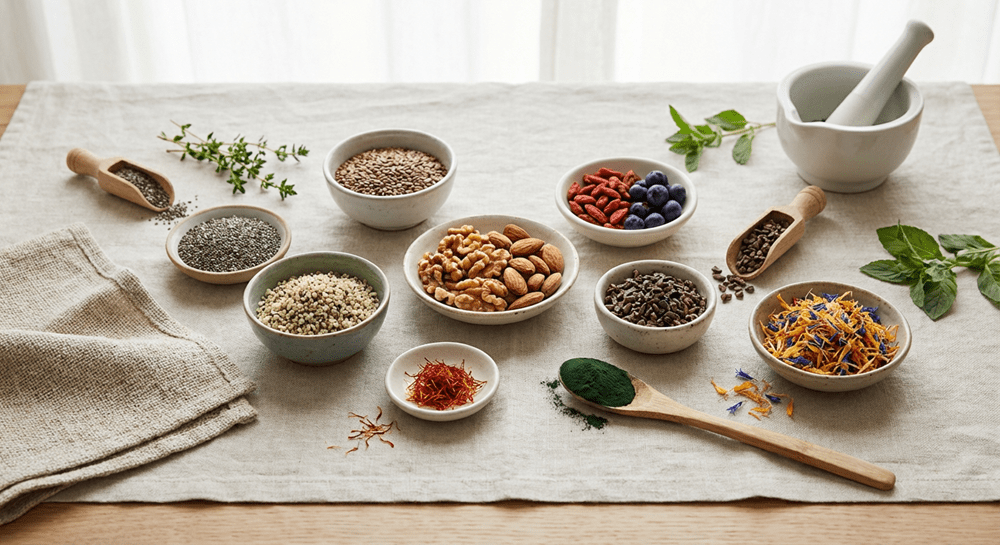
Bowls of seeds, nuts, berries, cacao nibs, herbs, and flower petals arranged on a linen-covered table beside a mortar and pestle.

Raw food ingredients are foods or food materials that are minimally processed and typically not heated above a low-temperature threshold. Common examples include nuts, seeds, dried fruits, herbs, spices, edible flowers, cacao ingredients, and certain cold-processed powders. For most beginners, the key idea is simple: raw food ingredients are valued for being closer to their original form and easy to use in everyday meals.

You do not need to follow a fully raw diet to use them. Many people add raw food ingredients to breakfast bowls, smoothies, snacks, teas, baking, or savory dishes because they are practical, versatile, and fit well into a nutrient-dense diet.

At Blumental Bayern GmbH, we work with natural agricultural ingredients that connect traditional sourcing knowledge with strict European quality standards. That makes raw ingredients not just a wellness trend, but a category where quality, origin, handling, and traceability truly matter.


Quick Takeaways

    • Raw food ingredients are typically minimally processed and not exposed to high heat.
    • They can include nuts, seeds, herbs, spices, edible flowers, dried fruits, and cold-processed plant ingredients.
    • They are not the same thing as superfoods, functional foods, or supplements.
    • You can use them in everyday eating without following a strict raw or vegan lifestyle.
    • When choosing raw ingredients, quality, hygiene, storage, and sourcing matter as much as the “raw” label


What Counts as Raw Food Ingredients?

The exact definition of “raw” can vary slightly depending on the food philosophy or supplier. In practice, raw food ingredients usually refer to ingredients that have been harvested, cleaned, dried, pressed, or milled without intense heat or heavy refining.

Common examples include:

    • Nuts and seeds: almonds, walnuts, chia seeds, flax seeds, hemp seeds
    • Dried fruits and berries: figs, dates, apricots, goji berries
    • Edible flowers: rose petals, hibiscus, mallow, lavender
    • Herbs and spices: saffron, turmeric, ginger, pepper, cinnamon
    • Cacao ingredients: cacao nibs, cacao powder, cacao butter
    • Seaweed and algae: nori, dulse, spirulina, chlorella
    • Sprouted ingredients: sprouted grains, seeds, or legumes
    • Cold-processed powders: fruit powders, botanical powders, some plant protein powders

Some of these ingredients are used exactly as they are. Others may need soaking, sprouting, blending, or infusing before they are used in meals.

A neatly organized flat lay on a light wooden surface featuring various healthy ingredients arranged in distinct groups. The assortment includes clusters of almonds, walnuts, dried apricots, cranberries, dried figs, chia seeds, and flaxseeds. Small glass bowls hold dried lavender, rose petals, star anise, cinnamon sticks, and turmeric, alongside small scoops of green and yellow superfood powders.

Raw Food Ingredients VS Superfoods VS Functional Foods

These terms often overlap, but they are not interchangeable. “Raw” describes how an ingredient is processed. “Superfood” is a popular nutrition and marketing term. “Functional foods” usually refers to foods discussed in relation to specific nutritional functions or wellness goals. Supplements are a separate category again.

CategoryWhat it meansTypical formBest useBeginner-friendly?
Raw food ingredientsMinimally processed ingredients, typically not exposed to high heatWhole seeds, dried fruits, herbs, spices, powdersEveryday meals, snacks, teas, toppings, pantry staplesYes
SuperfoodsPopular term for foods seen as especially nutrient-dense or valued in wellness-focused dietsBerries, seeds, greens, algae, spicesAdding variety and nutritional interest to the dietYes
Functional foodsFoods commonly discussed in relation to specific nutritional functions or wellness goalsFermented foods, fiber-rich ingredients, omega-3-rich seedsSupporting an overall balanced routineUsually
SupplementsConcentrated products designed to complement the dietCapsules, tablets, extracts, powdersWhen people want a more concentrated format alongside foodSometimes

Why people use raw food ingredients

People choose raw food ingredients for many different reasons, and most of them are practical.

    • They make everyday meals more useful

A spoonful of seeds, a handful of dried berries, or a pinch of saffron can change the flavor, texture, and character of a simple meal without much effort.

    • They fit well into a nutrient-dense diet

Many raw ingredients are naturally rich in fiber, healthy fats, plant compounds, or minerals. That is one reason they are often included in whole-food routines and functional foods.

    • They are easy to keep on hand

Many raw ingredients are pantry-friendly and can be used in small amounts across sweet and savory meals. This makes them especially useful for busy professionals who want fast, low-fuss options.

    • They support “fiber-maxxing” in a realistic way

For readers interested in fiber-maxxing, ingredients like chia seeds, flax seeds, and dried berries are popular because they add fiber and texture to breakfasts, snacks, and baked goods.

    • They appeal to people exploring food-first wellness habits

Some people interested in nootropic nutrition or adaptogens for beginners look first at everyday ingredients rather than complex stacks or highly processed products. Raw seeds, cacao ingredients, herbs, and botanical powders can fit naturally into a broader food-first routine.

That said, no single ingredient does everything on its own. The value comes from how these ingredients fit into an overall balanced eating pattern.

Common Raw food ingredients and How to use them

If you are just getting started, choose a few ingredients that are easy to recognize and simple to use.

    • Chia seeds

Stir into yogurt alternatives, overnight oats, porridge, or smoothies. They are one of the easiest raw pantry staples for beginners.

    • Flax seeds

Use ground flax in breakfast bowls, baking, or homemade snack mixes. Many people also use it as a simple egg substitute in plant-based baking.

    • Hemp seeds

Sprinkle over salads, soups, grain bowls, or pasta dishes for a mild, nutty finish.

    • Cacao nibs

Add to smoothie bowls, trail mix, granola, or desserts when you want crunch and a less sweet chocolate note.

    • Goji berries

Use in muesli, snack jars, tea blends, or mixed with nuts and seeds.

A simple way to add aroma and visual appeal to tea blends, desserts, and garnishes.

Use a small amount in tea, rice dishes, broths, desserts, or premium spice blends. Because saffron quality can vary dramatically, origin and handling matter.

    • Sprouted ingredients

Often used in salads, grain dishes, wraps, or dehydrated snacks. Some people prefer them because they add texture and variety to minimally processed meals.

    • Herbal or botanical powders

These can be blended into smoothies, stirred into warm drinks, or included in recipes in small amounts, depending on the ingredient.

How to Choose High-Quality Raw Food Ingredients

This is where beginners often overlook the most important part. “Raw” does not automatically mean “better.” The quality of the ingredient depends heavily on sourcing, handling, storage, and supplier standards.

When choosing raw food ingredients, look for:

    • Traceability

Can the supplier clearly explain where the ingredient comes from? With products like saffron, dried flowers, herbs, nuts, and seeds, origin can affect aroma, color, consistency, and overall quality.

    • Careful post-harvest handling

Drying, cleaning, cutting, and packaging all influence freshness. Poor handling can lead to faded color, weak aroma, dustiness, moisture problems, or shortened shelf life.

    • Moisture control and storage

Raw ingredients are often sensitive to light, heat, oxygen, and humidity. Proper storage helps protect flavor, texture, and stability.

    • Hygiene and food safety

Because raw ingredients are not heavily processed, supplier hygiene and food safety systems matter. Standards such as HACCP and ISO 9001:2015 help show that ingredients are handled with care.

    • Organic options where relevant

For some buyers, EU-Bio certified ingredients are an important part of the decision, especially for herbs, spices, and botanical ingredients.

    • A supplier you can trust

A reliable supplier should be transparent, consistent, and able to explain the product clearly. This matters even more when you are buying premium ingredients for daily use or commercial applications.

A person wearing a white lab coat and white gloves meticulously inspects botanical ingredients on a stainless steel laboratory table. The person is carefully handling red saffron threads next to a small pile of dried chamomile flowers. On the table, there is a magnifying glass, tweezers, a clipboard with a checklist, and a neat row of glass jars filled with various dried herbs and seeds in the background.

Are Raw Food Ingredients Right for Everyone?

For many people, raw food ingredients are an easy way to add variety and interest to the diet. But they are not all used in the same way, and they do not need to become an all-or-nothing lifestyle.

A few practical points to keep in mind:

    • Some ingredients are easy to use daily, such as chia seeds, hemp seeds, or dried berries.
    • Some may be better soaked, sprouted, or ground before use.
    • Some raw ingredients may not suit every eating style, taste preference, or routine.
    • Variety and balance usually matter more than trying to make everything raw.

In other words, raw food ingredients can be useful whether you eat fully plant-based, mixed, mostly cooked, or somewhere in between.

How to Get Started with Raw Food Ingredients

If you are new to this category, start small and make it easy on yourself.

    1. Pick two or three staples

Choose simple options like chia seeds, hemp seeds, raw nuts, or dried berries.

    1. Add them to meals you already eat

Think breakfast bowls, smoothies, salads, tea blends, soups, yogurt alternatives, or homemade snacks.

    1. Try familiar before exotic

You do not need to start with rare ingredients. Local superfoods such as flax seeds, walnuts, or certain herbs can be just as useful as more trend-driven imports.

    1. Focus on quality over quantity

A few well-sourced ingredients are often more useful than a shelf full of products you never actually use.

    1. Store them properly

Use airtight containers and keep them in a cool, dry, dark place when appropriate.


FAQ


Raw food ingredients are minimally processed foods or food materials that are typically not heated above a low-temperature threshold. Common examples include seeds, nuts, dried fruits, herbs, spices, and edible flowers.

Usually, yes in terms of how they are produced and sold. But they can still be used in recipes that include other prepared or cooked components.

No. “Raw” refers to processing, while “superfood” is a popular term for foods seen as especially nutrient-dense or widely valued in wellness-focused diets.

Yes. Many beginner-friendly ingredients, such as chia seeds, hemp seeds, walnuts, and dried berries, are easy to include in everyday meals and snacks.

Some do. Because many contain natural oils or are sensitive to moisture, they are often best stored in airtight containers away from heat, light, and humidity.

No. While they are common in vegan and plant-based eating, raw food ingredients can be used by anyone who wants more minimally processed ingredients in everyday meals.

A Simple Way to Start

You do not need a full pantry makeover to begin. Start with a few dependable ingredients, use them often, and pay attention to quality from the start.

If you would like to explore versatile ingredients selected for traceability, purity, and everyday use, explore our raw ingredient range.