Each batch is validated by independent German laboratories to guarantee compliance with EU maximum residue limits and the stability of the active ingredients. With Blumental Bayern, you are assured of a technically superior raw material, backed by ISO 9001:2015 and EU organic certification (DE-ÖKO-037)
Certifications: EU organic (DE-ÖKO-037), ISO 9001:2015, HACCP.
MOQ: 100 kg (industrial container).
Logistics: Direct shipping from Nuremberg; optimized EU-wide distribution with full laboratory transparency.
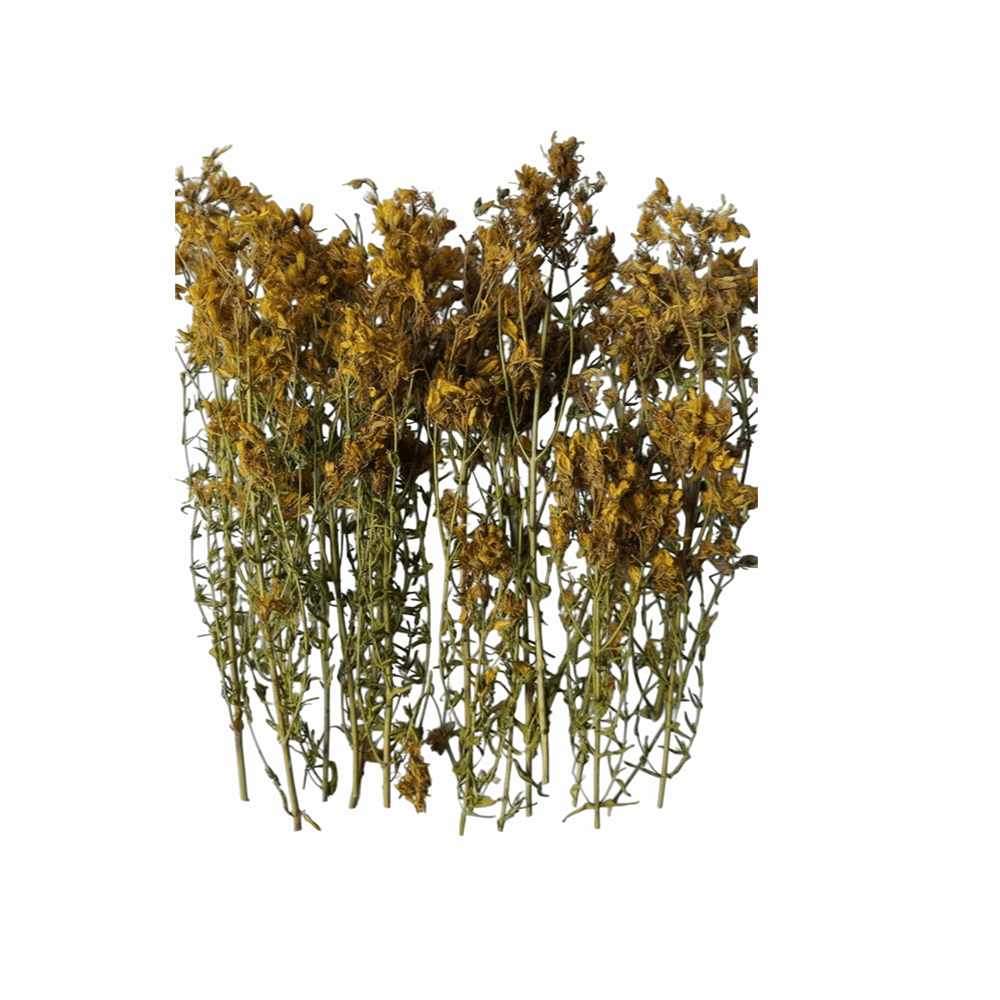
Product description: Blumental Bayern offers high-quality St. John's wort(Hypericum perforatum) for industrial production in the areas of phytopharmaceuticals, food supplements and cosmetics. Our raw material is harvested at the time of the highest concentration of active ingredients (end of June) in order to guarantee maximum levels of hypericin, hyperforin and flavonoids. Available as whole or cut herb, our St. John's wort is processed under strict quality controls to preserve its aromatic profile and bioactivity. Whether for mood-enhancing preparations, calming tea blends or as a base for "red oil" in natural cosmetics - we supply tested wholesale quality in accordance with strict European purity standards.
It is used for mood-enhancing preparations, calming teas and dermatological oils (red oil).
Store in a cool, dry place away from light to prevent degradation of the light-sensitive hypericins.
Yes, our organic and conventional batches are tested for EU maximum residue levels in German laboratories.
We supply St. John's wort whole, cut (TBC) or powdered, depending on your production requirements.
| Botanical name | Hypericum perforatum |
|---|---|
| Plant part used | Flowering herb top |
| Moisture content | ≤ 10–12% |
| Purity | ≥ 97% |
| Packaging | Plastic bags in cartons |
| Shelf life | 24 months |
| Storage conditions | Cool, dry place, away from direct sunlight |
Product specifications may change or be updated from time to time. For the latest specification, please contact us.
Tell us your quality and volume — we reply within 24 hours with pricing, lead time and documentation for your market.
DE: Um das beste Erlebnis zu bieten, verwenden wir Technologien wie Cookies, um Geräteinformationen zu speichern und/oder darauf zuzugreifen. Wenn Sie diesen Technologien zustimmen, können wir Daten wie das Surfverhalten oder eindeutige IDs auf dieser Website verarbeiten. Wenn Sie nicht zustimmen oder Ihre Zustimmung widerrufen, kann dies zu einer Beeinträchtigung bestimmter Funktionen und Merkmale führen.
EN: To provide the best experiences, we use technologies like cookies to store and/or access device information. Consenting to these technologies will allow us to process data such as browsing behavior or unique IDs on this site. Not consenting or withdrawing consent, may adversely affect certain features and functions.